
How Do Drug Researchers Validate a Biological Target Before Investing in a New Medicine?
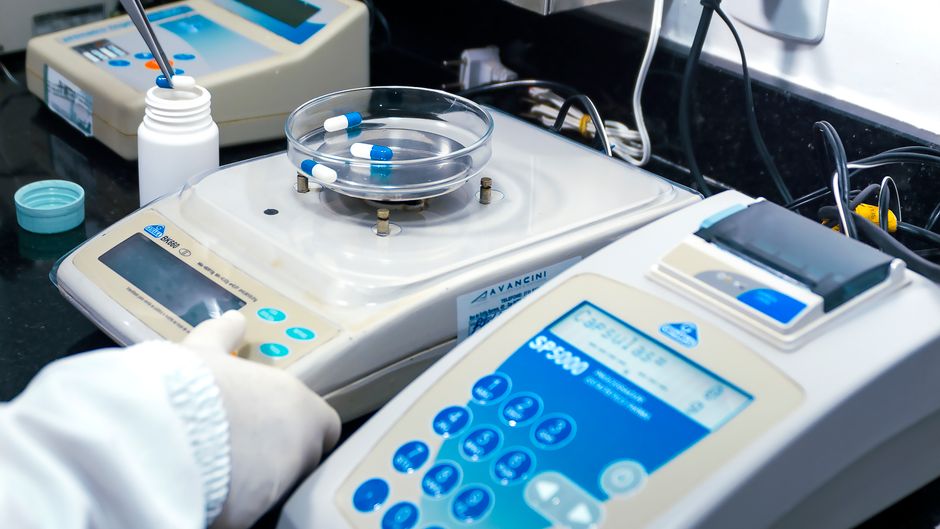
Drug researchers validate a target by showing that it drives a disease, that changing it can produce a useful effect, and that a drug can reach and engage it in the right human tissue. They test this claim with human genetics, patient evidence, tool compounds, genetic experiments, animal models, and biomarkers before a costly clinical program begins.
A target is not a product. It is a biological bet.
The strongest programs keep asking the same hard question: if the drug fails, did the idea fail, or did the drug fail to test the idea?
What makes a protein or gene a good drug target?
A good target sits in the disease process, can be changed by a treatment, and gives researchers a way to see whether that change happened in the intended tissue.
The NCBI Early Drug Discovery and Development Guidelines define target validation as showing that a molecular target is directly involved in disease and that modulating it is likely to have a therapeutic effect. That definition contains two separate tests: cause and control. A target can be present in sick tissue without causing the sickness. A target can also cause disease yet resist safe, useful drug treatment.
Researchers build a case from independent lines of evidence. They look for the target in the relevant tissue. They ask whether human genetic changes in the gene track with disease. They use a known molecule or a selective tool compound to alter the target. They silence, remove, or alter the gene with approaches such as knockout or siRNA. They then measure an outcome that reflects the biology they hope to change.
The National Academies places pharmacologically relevant tissue exposure and target engagement near the center of this work. A compound that never reaches enough of the right tissue has not tested the target. A compound that reaches tissue but does not bind or alter its intended target has not tested it either.
| Question | Evidence that addresses it | What it rules out |
|---|---|---|
| Is the target tied to disease? | Human genetics, patient tissue expression, clinical observations | A bystander signal |
| Does changing it alter disease biology? | Tool compounds, knockout, siRNA, representative assays | An inactive hypothesis |
| Can a medicine test it in people? | Tissue exposure, target-engagement measures, translational endpoints | A dosing or delivery failure |
Evidence is not a pile of papers. It is a chain. The weak link decides the risk.
How do scientists prove that a drug target causes disease?
Scientists do not prove causation with one experiment; they look for agreement between human genetics, patient biology, controlled perturbation, and clinical evidence.
Human genetics is a strong starting point because the genetic variation exists in people. A 2024 Nature analysis examined 29,476 target-indication pairs and found that mechanisms with human genetic support had a 2.6-times greater probability of clinical success. Relative clinical success exceeded two across every human-genetics source the study assessed, and OMIM Mendelian evidence had a relative success of 3.7.
That signal does not erase the rest of the work. The same analysis states that genetic association alone does not guarantee a tractable or successful target. A disease-linked gene can act in a tissue a drug cannot safely reach. Its effect can depend on timing, cell type, or degree of change. A lifelong genetic change is not identical to turning a target up or down with a medicine later in life.
So teams compare evidence from several directions. A patient sample can show whether the target appears where the disease occurs. CRISPR, knockout, or RNA-based experiments can test whether changing the target changes a disease-relevant cell readout. A selective tool compound can ask the same question through pharmacology. If genetic and chemical experiments point in the same direction, confidence rises. If they conflict, the conflict is the finding.
Clinical proof needs a marker that separates a failed target from a failed test. The National Academies report stresses measuring target engagement in the intended patient population. A trial with no clinical benefit but clear engagement can challenge the target hypothesis. A trial with no engagement cannot do that. It has answered a different question.
There is also a discipline problem. Nature found that only 373 of 1,147 qualifying, genetically supported and clinically pursued targets had been pursued for at least one genetically supported indication. Development effort for unsupported indications outnumbered supported ones by 17 to 1. The evidence can be strong while the chosen disease is weak.
Why do drugs that work in mice fail in clinical trials?
Drugs that work in mice fail in clinical trials because animal biology and human biology differ, preclinical findings can fail to reproduce, and a study can miss the human tissue, target, dose, or disease state that matters.
The FDA states that more than 90% of drugs that appear safe and effective in animals do not receive FDA approval in humans, predominantly because safety or efficacy problems emerge later. Its Roadmap to Reducing Animal Testing in Preclinical Safety Studies names differences in immune systems, physiology, metabolism, disease susceptibility, and pharmacology. A mouse model is evidence. It is not a miniature patient.
The FDA's TGN1412 example shows the gap in severe form: the antibody appeared safe in monkeys at doses up to 500 times the planned human dose, then caused life-threatening cytokine-release syndrome in all six healthy volunteers in its 2006 first-in-human trial. Safety depends on the species, the target, the immune setting, and the test system.
Translation rates offer no neat comfort. A systematic scoping review in the Journal of Translational Medicine reviewed 121 references comparing animal and human results. Reported success ranged from 0% to 100%, while binary definitions ranged from 0% to 93%. The review judged this wide range difficult to predict in advance and found high risk of bias in the evidence it assessed.
Reproducibility adds another filter. A PLOS Biology article from the Center for Open Science reports that cancer-biology replication effect sizes averaged 85% smaller than the original effects. It identifies small samples, missing blinding or randomization, reagent problems, and poor methods or data transparency as common causes of weak preclinical reproducibility.
The practical response is plain: repeat decisive work in independent laboratories, use standardized protocols, benchmark models against human clinical data, and build human-relevant cell, computational, and organotypic models into the evidence chain. The FDA recommends each of these moves. More models do not equal more truth. Better tests do.
Frequently Asked Questions
What is the difference between target validation and lead optimization?
Target validation asks whether changing a protein or gene should help treat a disease. Lead optimization starts after that question has enough support and works on a chemical molecule: its activity, selectivity, stability, synthetic feasibility, and early in-vivo evidence. The NCBI guidelines describe a lead as a drug-like molecule with primary and secondary assay activity and acceptable specificity and selectivity.
How can genetic evidence improve drug discovery decisions?
Human genetic evidence can connect a target to disease biology, expected drug effects, dose-response relationships, and safety risks before a large clinical investment. A 2024 Nature analysis found that mechanisms with genetic support had a 2.6-times greater probability of clinical success than those without it. Genetic association is evidence, not a verdict; the target still needs exposure, engagement, and therapeutic proof.
Sources
- Nature - Refining the impact of genetic evidence on clinical success
- National Center for Biotechnology Information - Early Drug Discovery and Development Guidelines
- National Academies of Sciences, Engineering, and Medicine - Target Validation
- Journal of Translational Medicine - Animal to human translation
- Center for Open Science / PLOS Biology - Building reproducible bridges to cross the valley of death
- U.S. Food and Drug Administration - Roadmap to Reducing Animal Testing in Preclinical Safety Studies
Related guides

Why Can’t We Make a Perfectly Empty Vacuum?
Why no vacuum is perfectly empty, what ultra-high vacuum means, and how laboratory chambers compare with deep space.