
How Do I Visit a Commercial Art Gallery for the First Time?
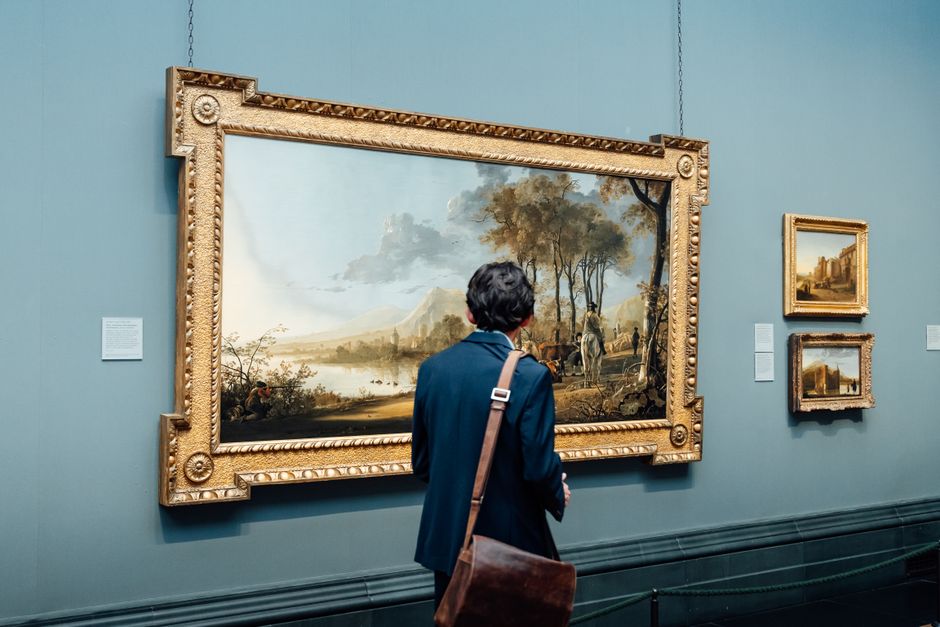
Yes: you can usually walk into a commercial gallery during posted hours, look without buying, ask for a price list, and leave when you are ready. Wear clean, comfortable clothes, keep hands off the art, check the photography policy before taking a picture, and use an opening reception to look and ask one clear question rather than treating it like a test.
The useful mindset is not “act like a collector.” It is “act like a careful visitor.” That lowers the stakes and gives staff the information they need: you are interested, respectful, and not expecting them to decode a vague question for you.
Can I walk into an art gallery if I do not plan to buy anything?
Yes. Commercial galleries are generally free and open to the public, and you can enter during posted hours without an appointment. In a 2024 first-timer guide, CULTURED puts it plainly: check the hours, then walk in.
Use a quiet daytime visit as your low-pressure first rep. Enter, give the room a quick scan, and start with one work that holds your attention. You do not need to announce that you are not buying. Looking is the purpose of a gallery visit; buying is a separate decision.
The arrival script: “Hi, I am visiting for the first time. Is there anything I should know before I look around?” That one sentence handles the unknowns: a restricted room, a current photography rule, or a bag policy.
The non-negotiable rule is touch. CULTURED identifies not touching art as the essential rule, and the Smithsonian American Art Museum explains why: salts and oils from hands can damage artworks, including sculpture and furniture. Keep bags close, skip food and drinks, and move slowly near works that are unframed, freestanding, or low to the floor.
| Moment | Use this move | Say this |
|---|---|---|
| Entering | Check the room and desk before wandering. | “Is there anything I should know before I start?” |
| Seeing a work you like | Describe what caught your eye. | “The material caught my attention. What is it?” |
| Leaving | Exit without apologizing or overexplaining. | “Thank you. I enjoyed seeing the show.” |
Do I need to dress up for an art gallery opening?
No. You do not need formal clothes for an art gallery opening; CULTURED reports that visitors can wear whatever they want, including workout clothing. The better standard is practical: wear something comfortable enough to stand and move through a crowded room without managing a large coat, loose bag, or drink.
An opening reception is different from a quiet daytime visit because more people may be talking, looking, and trying to greet the artist or gallery team. Treat it as a viewing event first. Look at the work before trying to start a long conversation.
The opening-night rule: make your question smaller. Weak: “Can you explain the whole show?” Strong: “I noticed this work is placed beside that one. Was that relationship intentional?” The second question gives staff an answerable starting point and keeps the line moving.
Keep your voice measured and your phone quiet. The Museum of Modern Art asks visitors to use a courteous volume and set phones to vibrate or silent. A commercial gallery can set its own rules, but that is a sound default when the room is busy.
Is it rude to ask how much a piece of art costs?
No. Asking the price is normal, and it is usually more efficient to ask for a price list than to point at works one by one. CULTURED notes that smaller galleries may provide a list from the front desk that identifies titles and sold works; Art Guide Australia describes the same tool as a room sheet, matching titles to prices.
Use a direct, low-friction line: “Could I see the price list for this exhibition?” If one work matters, add: “Could you also tell me whether this is a unique work or part of an edition?” That is not a bargaining performance. It is basic decision information.
Ask the questions in an order that protects your time: price first, then whether the work is available, then edition or unique-work status, then what the gallery can share about the artist or purchase process. Do not invent urgency for yourself. A clear answer is more useful than a polished impression.
If you see a red dot, the work has sold, according to Art Guide Australia. A half-red dot can mean a deposit has been taken or another buyer is seriously considering it. The replacement move is simple: “Is there related work available, or may I ask about future work?”
Can I take photos inside an art gallery?
Ask first, then follow the answer and any signs. Policies vary by gallery, artist, lender, and exhibition, so permission at one venue does not carry to the next. The Smithsonian generally permits handheld personal photography and video but warns that individual works or special exhibitions may be restricted.
Use this exact line before lifting your phone: “May I take a personal photo of this work?” That is faster than guessing and avoids putting staff in the position of correcting you after the fact. If photography is allowed, keep the setup small: no flash, no tripod, no selfie stick, and no blocking another visitor’s view.
Those limits are common at major institutions. The National Gallery of Art permits personal-use photography except where prohibited, but bars monopods, tripods, and selfie sticks. It also asks visitors to stay about two feet from art, because dirt, moisture, and contaminants can cause staining, corrosion, or permanent damage.
That distance is your practical guardrail. The Art Institute of Chicago adds that floor lines or wires sometimes mark the safe viewing distance. If no marker is present, take the photo from where you can keep your hands, phone, and bag fully clear of the work.
Frequently Asked Questions
What questions should I ask gallery staff about an artwork?
Start with what you can see: “Could you tell me more about the materials?” or “Was this placement chosen for a reason?” Then ask practical follow-ups: “Is this unique or part of an edition?” and “May I see the room sheet?” CULTURED recommends observational questions over asking only, “What does this mean?”
What does a red dot next to artwork mean?
A red dot usually means the work has sold. Art Guide Australia explains that a half-red dot can mean a deposit has been taken or another buyer is seriously considering the work. Ask the gallery whether similar works, editions, or future availability exist rather than assuming the conversation is over.
How close can I stand to art without breaking etiquette?
Use about two feet as a practical default unless floor lines, wires, staff, or signage tell you otherwise. The National Gallery of Art asks visitors to keep about two feet from art, while the Art Institute of Chicago notes that floor markers can set a safe distance. Step back farther for unframed or unprotected work and whenever your bag, coat, or phone could swing toward it.
Your first-visit drill: choose one gallery, check its posted hours, and make one visit with no purchase goal. Ask one specific question, observe the photo policy, and leave with one detail you noticed. The point is not to sound fluent. The point is to make the next visit require less thought.