
Can a Power Grid Run on 100% Renewable Energy?
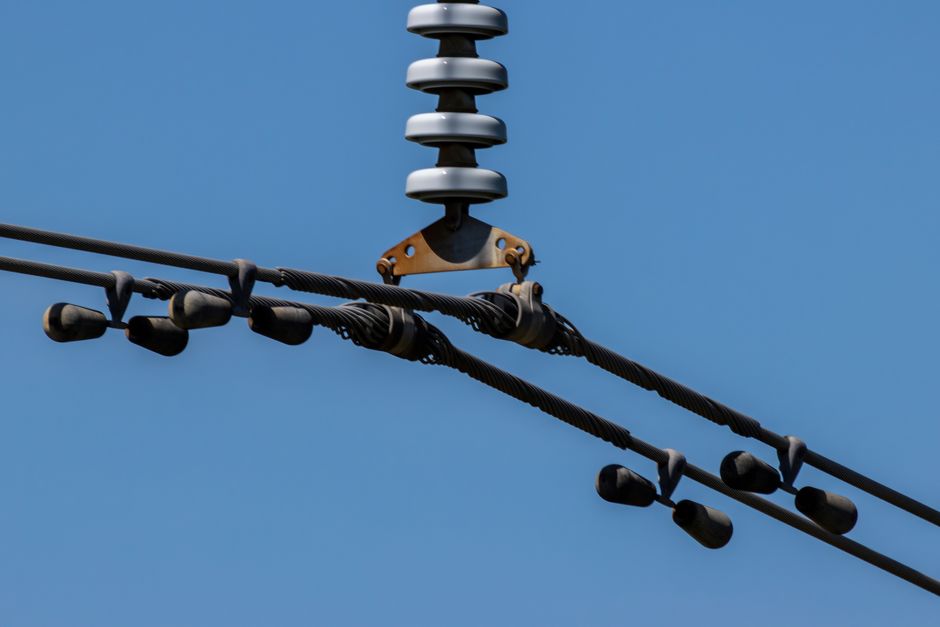
Yes. A 100% renewable electricity grid can stay reliable when it works as a portfolio: wind and solar supply most generation, batteries and demand response cover short gaps, transmission shares supply, and long-duration resources cover prolonged lulls. NREL finds that studies of systems reaching 30% to 100% renewable generation achieve desired reliability when grid planning and operations change.
Can a power grid run on 100% renewable energy?
Yes, if “100%” describes electricity and the system is designed for every hour, not only for annual average generation.
A yearly total can hide a hard night, a still week, or a winter mismatch. Reliability is the ability to meet demand through each of those periods and to remain stable after a disturbance. NREL identifies three tests at high wind and solar shares: managing short-term swings, meeting demand in every hour of the year, and preserving stability after grid disturbances.
The starting point is stronger than many debates suggest. In 2023, clean resources including renewables and nuclear produced about 41% of U.S. electricity, while wind and solar supplied more than 16%; the bulk power system maintained high reliability. NREL also reports that several U.S. regions have already seen instantaneous wind-and-solar shares above 80%.
That does not turn one sunny hour into a dependable year. It shows the grid is not a single machine with one fuel switch. It is a chain of generation, wires, storage, reserves, controls, and demand.
NREL's 2035 clean-electricity study modeled pathways that maintain safe, reliable power during every hour of the year. In its least-cost modeled mixes, wind and solar provide 60% to 80% of 2035 generation, with about 2 terawatts of combined capacity. The remaining work comes from complementary resources, not a larger pile of identical batteries.
| Grid problem | Resources identified in the studies | Time scale |
|---|---|---|
| Fast changes and evening gaps | Batteries, demand response, operating reserves | Hours |
| Weather-driven lulls | Long-duration storage, pumped hydro, dispatchable capacity, wider transmission | Days to weeks |
| Seasonal supply-demand mismatch | Hydrogen, hydro, low-emissions thermal plants, seasonal storage | Weeks to months |
These are electricity findings. They do not answer whether every form of total energy use is renewable. NREL's model concerns the electricity grid, and the IEA analysis concerns electricity-system operations.
What happens when there is no wind or sun for several days?
When wind and solar output stays low for several days, the grid must draw on resources that do not need immediate sun or wind to recharge.
The International Energy Agency documented low-wind-and-solar events in Northern Europe during November and December 2024. Germany and nearby regions faced events on November 5-7 and December 11-12. In the United Kingdom, a roughly one-day low-wind event on January 8, 2025, combined with outages, maintenance, and high demand, led the system operator to issue a notice over low system margins. Electricity supply was not disrupted, though wholesale prices spiked for several hours.
The length of the lull changes the answer. For a one- or two-day drought, the IEA says short-duration storage and demand response can smooth residual demand. A longer drought is tougher because short-term storage cannot readily recharge while low renewable output persists.
Transmission changes the shape of the problem. NREL models transmission capacity rising from one to almost three times the current level, depending on the pathway. A larger network can move power between balancing areas with different weather and demand patterns. It does not create energy from a continent-wide lull. It gives the system more places to find it.
Firm capacity is the last line in the chain. The IEA assigns batteries and demand response to shorter timescales, while hydrogen can span weeks to seasons. Hydro and low-emissions thermal plants remain seasonal balancing resources in its modeled systems. Resource mix follows geography, climate, demand patterns, and available supply. One region's answer is not another region's answer.
A reliable grid is not built for the average day. It is built for the day the average hides.
How much battery storage would a 100% renewable grid need?
A 100% renewable grid needs far more than batteries, and the amount of battery storage depends on which gap the battery is meant to cover.
The U.S. Department of Energy classifies short-duration storage as 0-4 hours, inter-day storage as 10-36 hours, multi-day or week storage as 36-160 hours, and seasonal shifting as more than 160 hours. Batteries fit intraday shifting and frequency regulation. Chemical storage such as hydrogen fits seasonal shifting.
NREL's modeled 2035 pathways deploy 120 to 350 gigawatts of 2-12-hour diurnal storage. Seasonal storage becomes important when clean electricity reaches about 80% to 95% of generation, where multiday and seasonal mismatches emerge. Its modeled seasonal capacity ranges from 100 to 680 gigawatts in 2035.
The DOE projects that a U.S. net-zero economy could need 225 to 460 gigawatts of long-duration energy storage by 2050, with about $330 billion in cumulative capital requirements. It also estimates that multi-day storage costs need to fall 45% to 55% by 2028-2030 for commercialization, targeting roughly $1,100 per kilowatt and 55% to 60% round-trip efficiency.
This is the useful distinction: battery capacity handles repeated daily shifts; energy stored over long periods handles rare, stubborn weather events. Treating both as one battery question erases the central constraint.
Grid reliability also reaches household budgets through electricity bills, yet a reliable system does not solve an immediate bill emergency. For practical short-term options, see Who Can Help Pay Rent or Utilities Before Payday?
Frequently Asked Questions
Why is the last 10% of grid decarbonization so difficult?
The hardest hours arrive when renewable output stays low while demand remains high. NREL finds seasonal storage becomes important at roughly 80% to 95% clean electricity because the problem shifts from daily balancing to multiday and seasonal mismatches.
Would a fully renewable grid need nuclear power or natural gas backup?
The provided studies do not set one universal requirement for nuclear power or natural gas. NREL finds that nuclear capacity rises sharply in its modeled clean-electricity pathways when wind, solar, or transmission siting is constrained, while the IEA identifies hydro, hydrogen, and low-emissions thermal plants as seasonal balancing options.
The answer is not a battery count. It is a system built to endure the quiet hours.
Sources
- National Renewable Energy Laboratory, 100% Clean Electricity by 2035 Study
- National Renewable Energy Laboratory, Maintaining Grid Reliability: Lessons From Renewable Integration Studies
- U.S. Department of Energy, Pathways to Commercial Liftoff: Long Duration Energy Storage
- International Energy Agency, Managing the Seasonal Variability of Electricity Demand and Supply
- International Energy Agency, Electricity 2025: Supply
Related guides

How Do Drug Researchers Validate a Biological Target Before Investing in a New Medicine?
How researchers test disease targets, why human genetics matters, and why promising animal studies often fail in clinical trials.

Why Can’t We Make a Perfectly Empty Vacuum?
Why no vacuum is perfectly empty, what ultra-high vacuum means, and how laboratory chambers compare with deep space.